A political jab aimed at Taylor Swift suddenly became daytime-TV fireworks when The View revisited comments questioning whether the superstar could understand ordinary Americans.
The clash followed Swift’s September 2024 voter-registration message after the MTV Video Music Awards, a post that drew praise from fans and immediate outrage from critics.
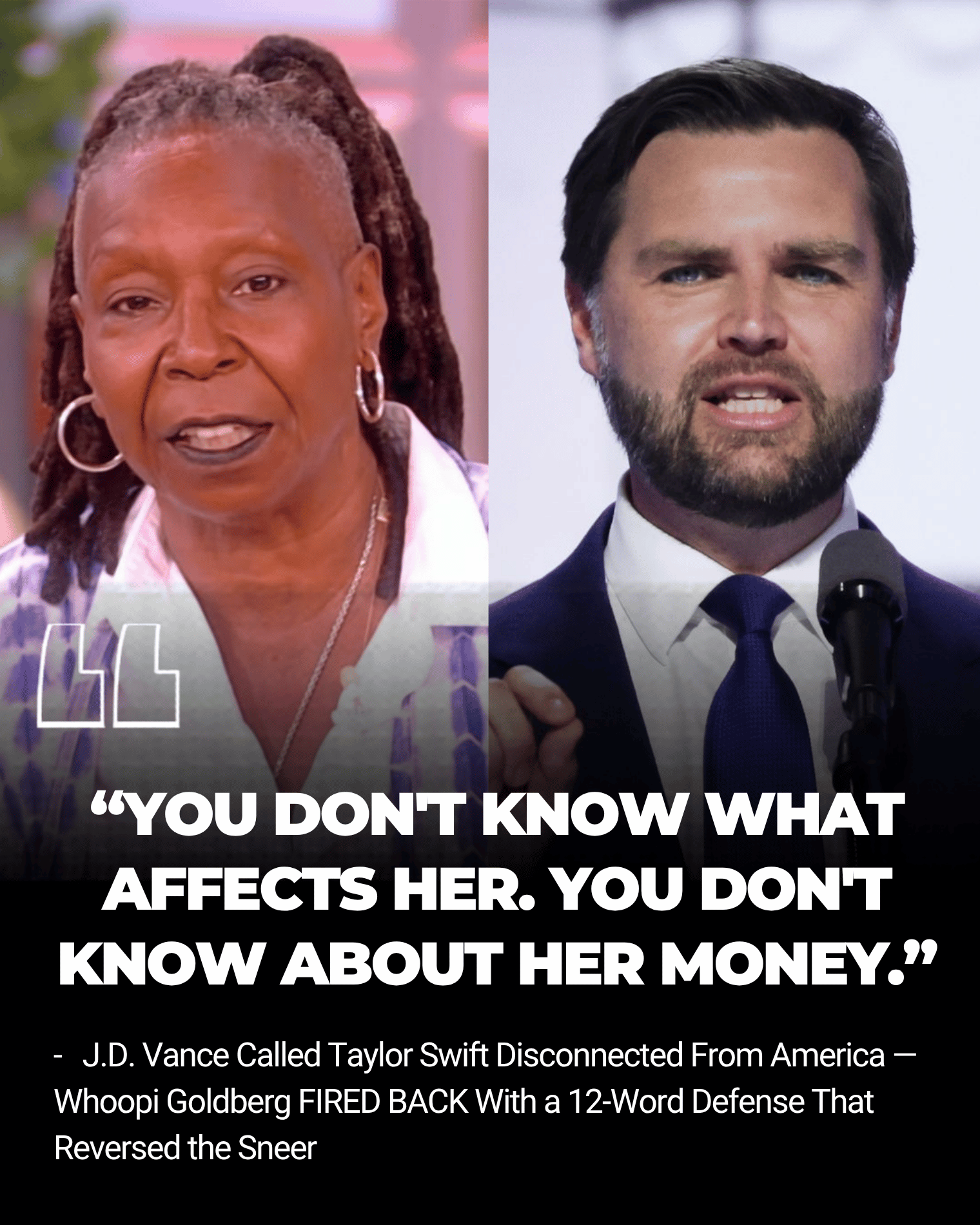
J.D. Vance dismissed the singer as a billionaire supposedly too removed from everyday life to speak credibly about civic participation, turning one Instagram prompt into a national argument.
But Whoopi Goldberg was not about to let that sweeping judgment glide across the table without a response that cut straight through the celebrity-versus-politics framing.
Goldberg pushed back with a blunt reality check, saying, “You don’t know what affects her. You don’t know about her money.”
The line landed because it did not pretend Taylor Swift lives the same life as every voter struggling with rent, groceries, or medical bills.
Instead, Goldberg challenged the confidence behind Vance’s assumption, asking why anyone believed fame and wealth gave outsiders permission to define another person’s concerns or motivations.
For years, Swift has existed in a public spotlight so intense that virtually every move becomes evidence for somebody else’s larger cultural argument.
A song release becomes a referendum, a concert appearance becomes a political signal, and a simple voter-registration reminder can become an excuse for rivals to question her entire character.
That was the real tension underneath the exchange: not whether Swift is rich, famous, or enormously influential, but whether celebrity automatically disqualifies someone from encouraging participation.
Goldberg’s defense did not argue that Swift should be treated as beyond criticism, and it did not turn the singer into a flawless political authority.
It simply rejected the idea that critics can confidently announce what a woman they do not know does, does not, or should care about.
The moment also reflected a bigger media habit, where famous women who speak publicly about voting are often treated less like citizens and more like problems to be managed.
Swift’s message was not a policy speech or a demand that fans vote for one candidate; it was an invitation to register and take part.
Yet that invitation was enough to trigger accusations that her influence was somehow illegitimate because millions of people listen when she speaks.
Goldberg briefly softened her own heated tone after firing back, but the core of her message remained impossible to miss.
No political commentator, no interviewer, and no online critic can fully measure another person’s private pressures, values, donations, fears, or reasons for speaking up.
In a culture obsessed with reducing Taylor Swift to a billionaire brand, Whoopi Goldberg’s response forced the conversation back toward something far more basic: celebrities are still citizens.