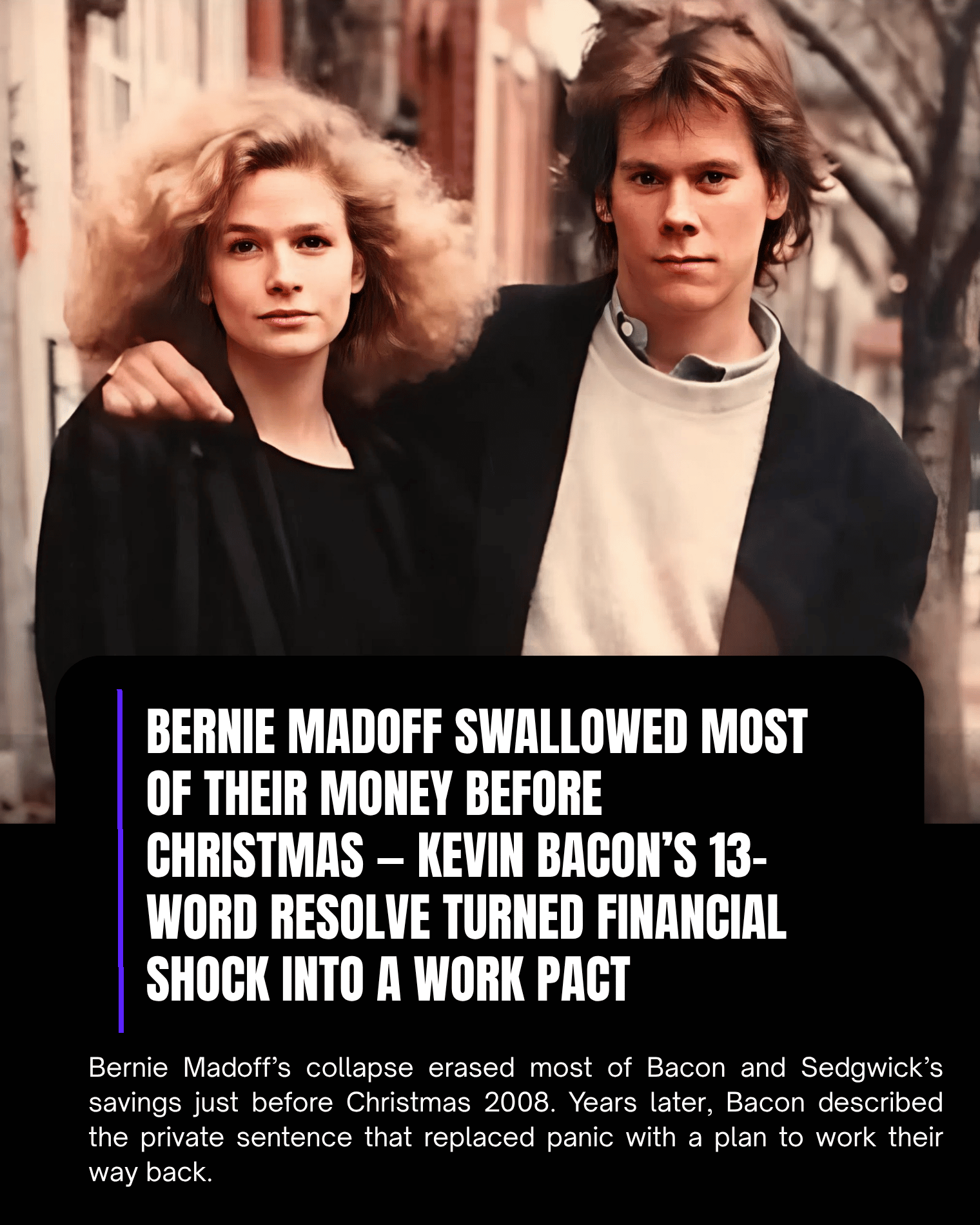
Bernie Madoff Swallowed Most of Their Money Before Christmas — Kevin Bacon’s 13-Word Resolve Turned Financial Shock Into a Work Pact after the actor and Kyra Sedgwick discovered that years of savings had nearly vanished overnight.
In December 2008, the couple learned that most of their money had been invested with Bernie Madoff, whose massive Ponzi scheme collapsed only days before Christmas. The timing made the blow feel especially brutal, transforming what should have been a family holiday into a private financial emergency.
Bacon and Sedgwick were not dealing with a bad investment or a temporary market dip. Their savings had been swallowed by one of the most infamous frauds in modern financial history, leaving them able to recover only a portion of what they had lost.
For two working actors with long careers, the public might have assumed the damage was survivable or even minor. Bacon later made clear that the loss was deeply serious, describing it as most of their money rather than some distant account they could easily replace.
The first reaction was anger, confusion, and the crushing realization that trust had been exploited. Yet the couple eventually reached a sentence that replaced panic with a plan: “Well, that sucks, and let’s roll up our sleeves and get to work.”
The line was blunt, almost funny in its understatement, but it revealed how Bacon and Sedgwick chose to survive the shock. They could not reverse the fraud, reclaim every dollar, or change the fact that Christmas had arrived with devastating news.
What they could do was keep working, keep supporting each other, and refuse to let Madoff’s crime define the rest of their lives. The decision turned financial disaster into a shared pact between two people who still had careers, health, and a family worth protecting.
Speaking on SmartLess in 2022, Bacon explained that perspective became essential to processing the loss. Their children were healthy, both he and Sedgwick remained capable of earning money, and many other victims had been left in far more desperate situations.
That comparison did not erase what happened to them, but it prevented bitterness from becoming the only story. Bacon acknowledged that retirees and families without future earning power had been financially destroyed, making his own anger feel inseparable from gratitude.
There was also no public revenge campaign, dramatic collapse, or attempt to turn victimhood into a permanent identity. Instead, Bacon described a quieter recovery built through continued work, emotional discipline, and the understanding that rebuilding would take time.
For a Hollywood couple, the response was strikingly unglamorous. There was no miracle rescue waiting off-camera, only new jobs, long days, and the determination to earn back what another man had stolen through deception.
Bacon’s 13-word resolve ultimately became more than a reaction to money disappearing. It captured the strength of a marriage facing sudden loss without blaming each other, retreating into fear, or pretending the damage did not hurt.
Madoff took most of their savings, but he did not take their ability to work, their family’s health, or their willingness to rebuild together. In the end, their comeback began not with triumph, but with one exhausted sentence and two people rolling up their sleeves.