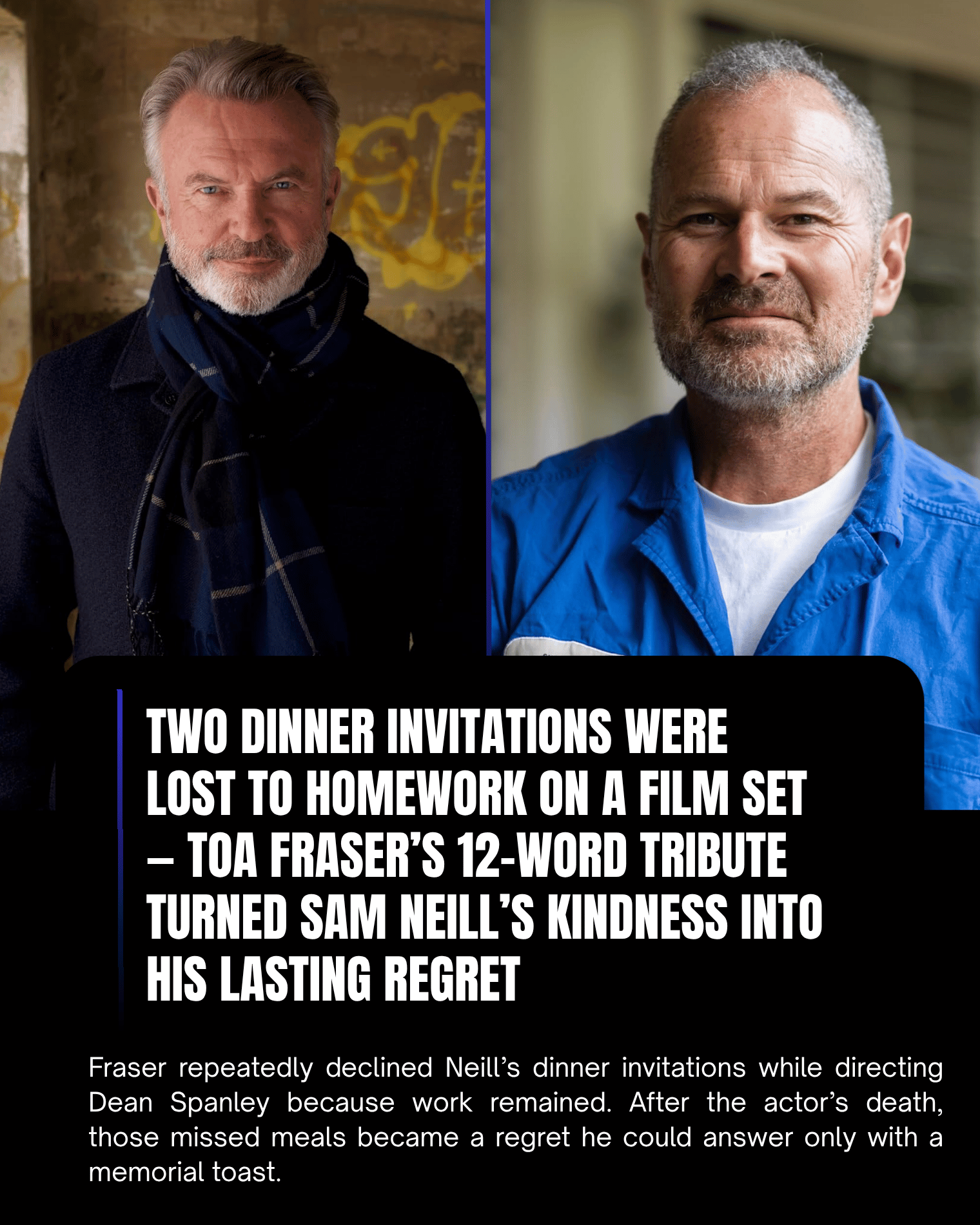
Two Dinner Invitations Were Lost to Homework on a Film Set — Toa Fraser’s 12-Word Tribute Turned Sam Neill’s Kindness Into His Lasting Regret became a heartbreaking confession about opportunities that never seemed precious until they disappeared forever.
While directing the 2008 drama Dean Spanley, filmmaker Toa Fraser found himself working alongside Sam Neill, an actor whose warmth reached far beyond the camera.
Neill did not merely arrive, perform his scenes, and retreat into celebrity distance; he actively supported Fraser and treated the director’s success as something worth protecting.
“Sam championed me and so many of us right from the start,” Fraser later recalled, capturing the generosity that made Neill such a beloved industry figure.
Yet the most painful part of Fraser’s tribute was not what happened during filming, but what repeatedly failed to happen once the cameras stopped rolling.
Neill invited Fraser to dinner more than once, offering the young director something far more valuable than a meal with a famous actor.
Each invitation promised conversation, friendship, laughter, and perhaps the kind of advice that only a veteran performer could casually deliver across a restaurant table.
But Fraser kept saying no because directing homework remained unfinished, and the production’s responsibilities felt too urgent to abandon for an evening.
At the time, the decision probably looked professional, disciplined, and completely reasonable—the sort of sacrifice ambitious filmmakers are constantly encouraged to make.
Then came the news of Neill’s sudden death, and those sensible refusals transformed into one of Fraser’s most enduring regrets.
The unfinished homework disappeared into history, but the dinners he never accepted became impossible to replace, replaying as reminders that time rarely announces its final invitation.
Fraser’s grief was sharpened by the knowledge that Neill had been offering genuine kindness, not simply observing social etiquette between colleagues.
The actor had championed him from the beginning, extending encouragement to Fraser and many others before they possessed the status that usually attracts Hollywood attention.
Unable to recover those missed evenings, Fraser planned a memorial toast involving Hungarian Tokay and Burgundian-style Pinot, honoring Neill and his mentor, James Mason.
The gesture carried affection and cinematic elegance, but it also revealed the terrible limitation of remembrance: a toast can honor someone, though it cannot reopen a declined invitation.
Fraser’s story now lands like a warning from every demanding workplace where tomorrow is treated as guaranteed and connection is postponed until deadlines disappear.
There will always be another page to review, another schedule to fix, and another problem demanding attention, but certain people will not always be waiting.
What began as two ordinary dinner invitations ultimately became a lasting lesson about recognizing kindness while it is still standing at the door.
Fraser could not change those evenings, but his tribute ensures Neill’s generosity—and the regret of missing it—will continue urging others to say yes.