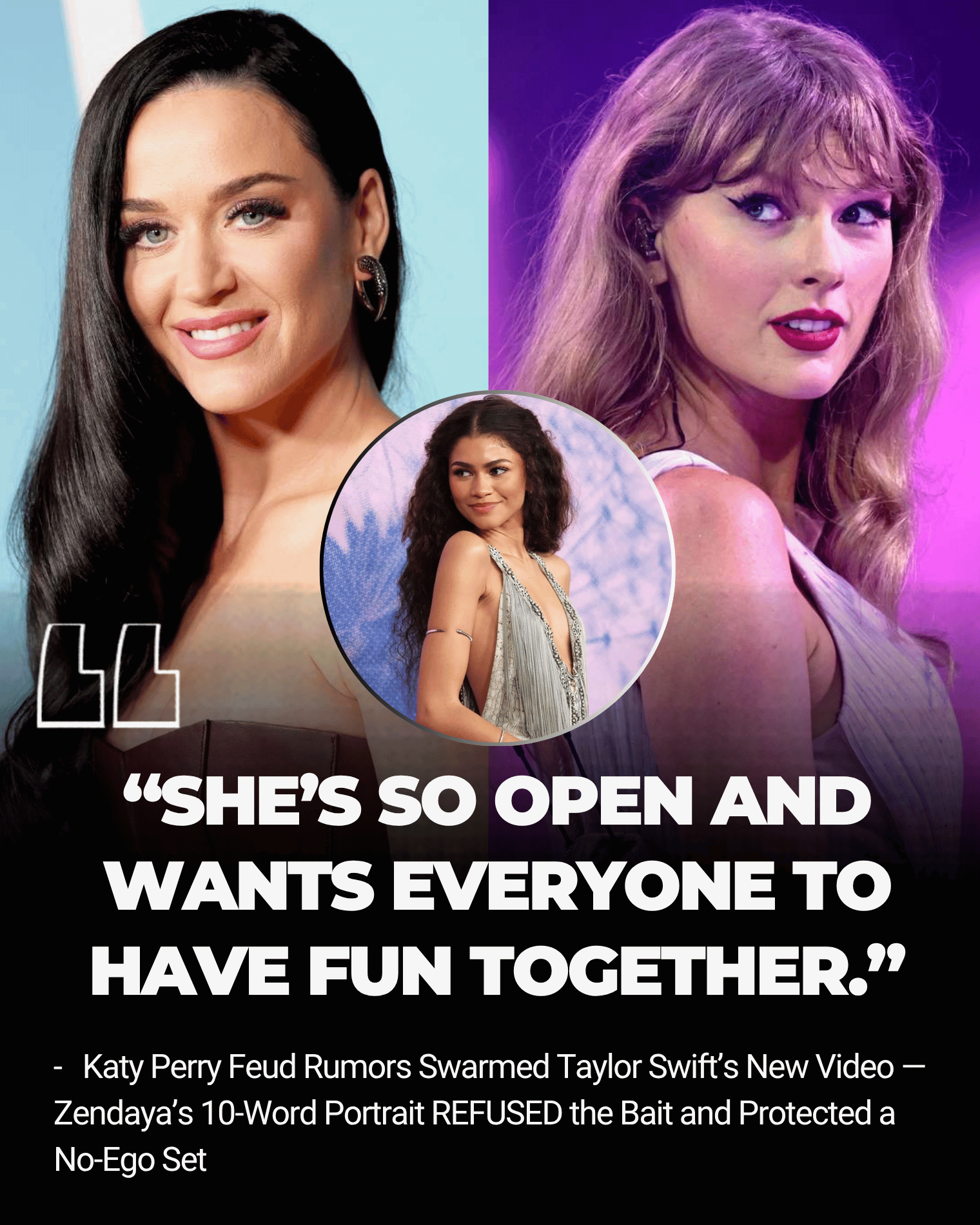
The video arrived wrapped in star power, with Taylor Swift assembling a glittering lineup that included Zendaya, Selena Gomez, and several famous friends ready to turn a pop anthem into a blockbuster-sized event.
But the spectacle came with a cloud of rumor, as longtime speculation claimed “Bad Blood” carried a pointed message toward Katy Perry, leaving every woman near Swift suddenly treated like a potential witness.
Zendaya, however, was not interested in becoming a pawn in anyone else’s pop-culture chess match, especially when reporters appeared eager to transform a fun shoot into another chapter of celebrity warfare.
Asked about the rumored feud, the actress made clear that she had not been handed some secret dossier, shady briefing, or backstage instruction to choose a side before stepping onto the set.
Instead, Zendaya offered a far more revealing picture of the experience, saying, “She’s so open and wants everyone to have fun together,” a calm answer that quietly dismantled the bait.
That ten-word observation did not give gossip outlets the dramatic ammunition they wanted, but it delivered something arguably more powerful: a firsthand account of a production without ego, tension, or manufactured division.
For fans watching the “Bad Blood” rollout become a tabloid storm, Zendaya’s response separated the song’s public mythology from the actual atmosphere shared by the performers who showed up to make it.
There was no hint of a battlefield behind the cameras, no suggestion that Taylor was recruiting famous allies for a private grudge, and no indication Zendaya saw the moment as anything except collaborative.
The former Disney star’s refusal to speculate became its own kind of statement, because she would not let an unconfirmed narrative rewrite a professional experience that she described as warm, inviting, and genuinely joyful.
That restraint mattered in a celebrity culture where one vague phrase can become a week of headlines, and where public friendships are often examined like evidence in an endlessly escalating court case.
Rather than amplify a feud she said she knew nothing about, Zendaya kept the focus on the people actually present, their shared energy, and the rare chance to create something playful together.
Her answer also protected a larger truth about superstar collaborations: not every famous face in a music video arrives carrying hidden loyalties, coded messages, or a desire to join someone else’s public dispute.
Zendaya’s perspective made the “Bad Blood” set sound less like a glamorous war room and more like an unusually relaxed gathering, where the biggest goal was making a bold visual moment land.
In the end, the rumors may have roared louder than ever, but Zendaya’s calm portrait of Taylor Swift offered a different headline entirely: openness, fun, and absolutely no appetite for unnecessary drama.