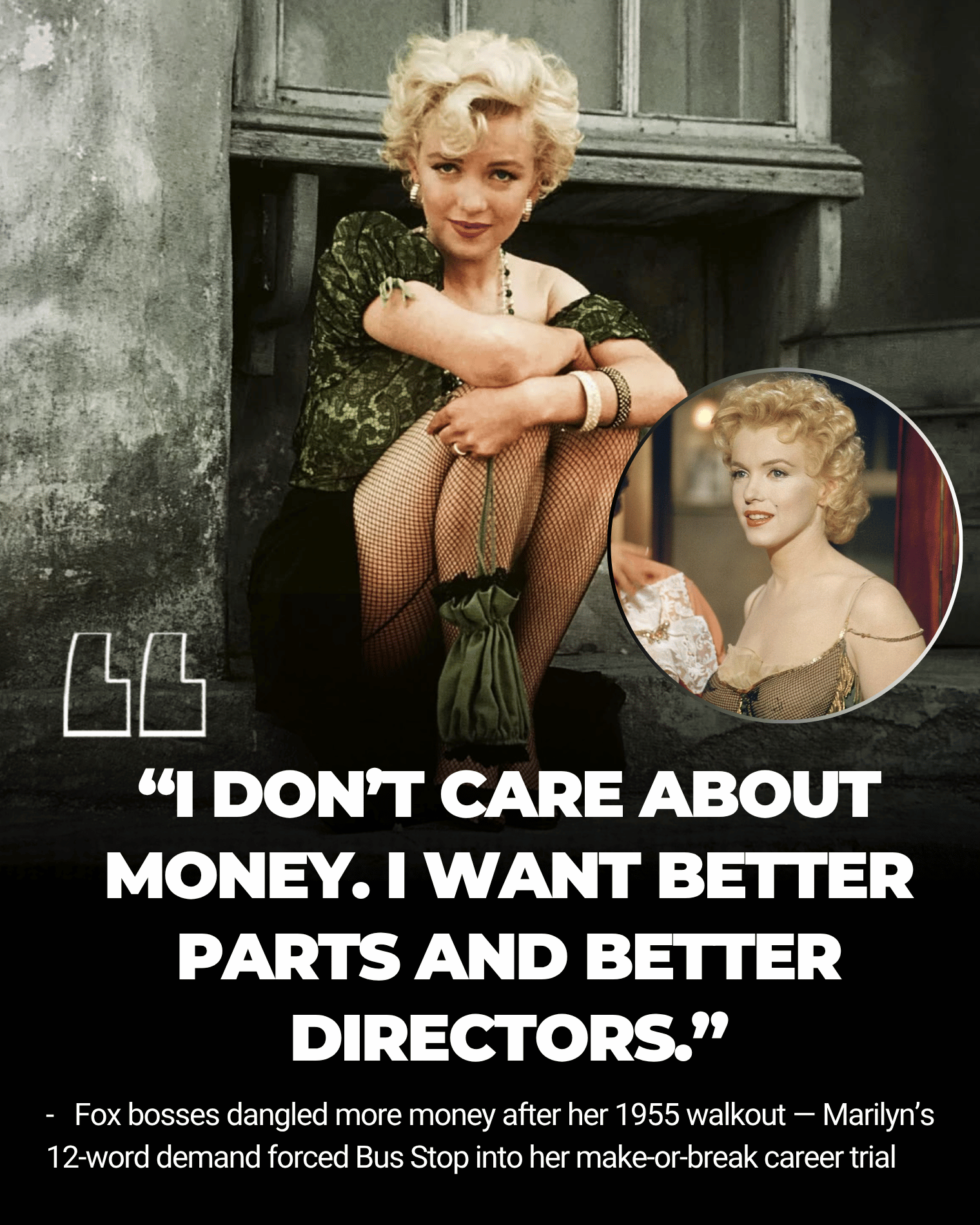
In 1955, Monroe walked away from 20th Century Fox while studio executives, columnists, and plenty of skeptical observers questioned whether the glamorous blonde truly possessed the discipline or depth to become a serious actress.
The response from the studio was painfully predictable: more money, more reassurance, and another attempt to solve a creative crisis with a larger paycheck. But Monroe was not asking for a bigger cage.
“I don’t care about money. I want better parts and better directors,” she declared, delivering a blunt twelve-word warning that stripped away every convenient excuse Hollywood had used to misunderstand her.
Fox had built an empire around Monroe’s beauty, breathy voice, and magnetic screen presence, yet the woman behind that image was increasingly determined to prove she could carry something heavier than a flirtatious fantasy.
Her decision was risky because it invited ridicule from an industry that loved her as a symbol but hesitated to trust her as an artist. The whispers were brutal: Marilyn wanted respect, but could she actually earn it?
Then came Bus Stop, the 1956 drama that became Monroe’s most dangerous professional gamble and, ultimately, one of her clearest declarations of independence. She was cast as Chérie, a singer whose vulnerability was far messier than the polished blonde characters audiences expected.
Under director Joshua Logan, Monroe was pushed beyond the familiar poses, comic timing, and carefully arranged glamour that had made her a global sensation. The performance demanded discomfort, emotional exposure, and a willingness to let audiences see the hurt beneath the sparkle.
Chérie was not a fantasy figure drifting through a man’s dream; she was bruised, guarded, frightened, and fighting to preserve her dignity. Monroe recognized that struggle, and she refused to soften it simply because Hollywood preferred her effortless.
The result was a performance that startled viewers who had spent years assuming Monroe’s power began and ended with her appearance. Suddenly, the woman once dismissed as a studio-made blonde bombshell was earning attention for restraint, sadness, and emotional intelligence.
Her walkout had not been a tantrum over money, nor a reckless attempt to control a system built long before she arrived. It was a calculated demand to be taken seriously by the people who had benefited most from underestimating her.
By the time Bus Stop reached audiences, the laughter around Monroe’s acting ambitions had started to sound embarrassingly outdated. She had taken the insult, rejected the easy payout, and turned a career crisis into proof that Marilyn Monroe wanted more than fame.
She wanted the chance to become unforgettable for reasons Hollywood had never bothered to imagine.