Roger Taylor helped Queen conquer stadiums, radio waves, and generations of fans, but one quiet confession revealed fame never erased the Cornwall boy beneath the rock-star legend.
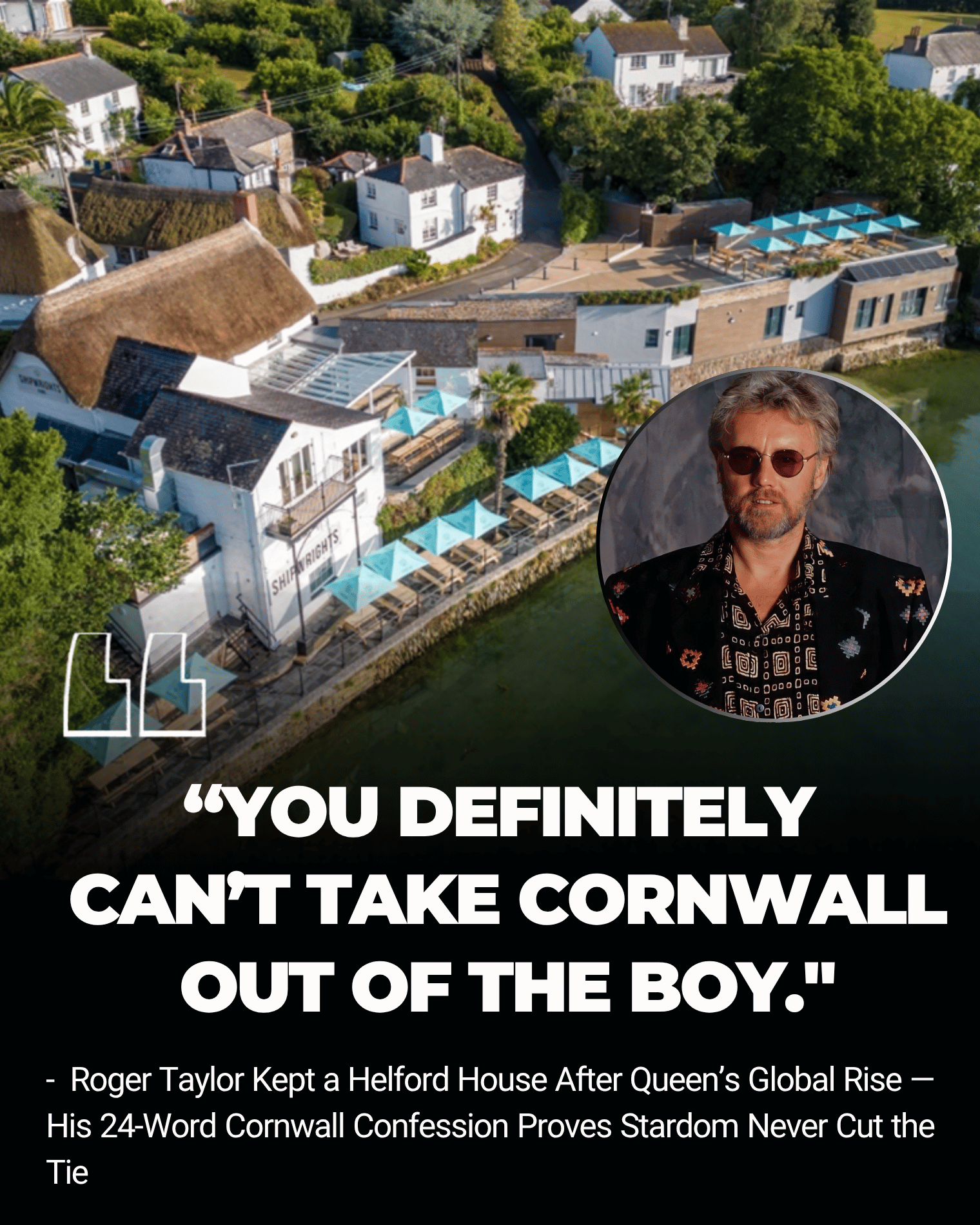
The drummer, raised in Truro before Queen transformed into one of music’s most unstoppable forces, made his connection to home unmistakably clear in a candid conversation with Cornwall Live. “You definitely can’t take Cornwall out of the boy. I don’t live permanently in the county, but I still have a house in Helford,” Taylor said, sounding less like a globe-trotting icon than someone still tethered to familiar shores.
It is a striking detail because Taylor’s life has been anything but small since Queen exploded beyond Britain and into the world. From pounding out the pulse of “Radio Ga Ga” to helping create the theatrical electricity of “A Kind of Magic,” he became part of a band whose reach was almost impossible to measure.
Yet behind the arena lights, blockbuster biopic attention, and the endless mythology surrounding Freddie Mercury, Brian May, John Deacon, and Queen’s wild ascent, Taylor kept something beautifully ordinary. A house in Helford may sound like a simple property note on paper, but emotionally, it lands as proof that the road out never fully became a road away.
Cornwall did not just sit in the background of Roger Taylor’s story as a birthplace listed in old biographies. It formed the early world of a young musician who would eventually stand behind one of rock’s most recognizable drum kits, helping drive songs that became permanent fixtures in pop culture.
For a star whose career has included world tours, royal-sized crowds, and records that refuse to fade, the idea of still maintaining a home in Helford feels almost defiant. It pushes back against the familiar celebrity script where success demands a total escape from the people and places that existed before the spotlight arrived.
Taylor did not present his Cornwall connection as nostalgia, a marketing move, or some carefully polished attempt to seem relatable. His words were plain, direct, and deeply human, carrying the kind of loyalty that cannot be staged by publicists or recreated through anniversary documentaries.
That matters because Queen’s legacy is often told through giant images: Wembley Stadium, glittering costumes, impossible vocal performances, and songs engineered to shake entire crowds at once. Taylor’s Helford home adds another image entirely, one that is quieter but somehow just as powerful—a musician returning to a part of England that still feels like his own.
The confession also gives fans a new way to see the man behind the drumbeat. Roger Taylor may have spent decades inside one of the biggest bands in history, but he has not allowed that extraordinary life to erase the place that shaped his earliest sense of self.
In an industry where fame can turn every connection into a transaction, Taylor’s continued link to Cornwall feels refreshingly solid. He did not need to announce a grand return or make a sentimental spectacle; simply keeping that house in Helford said enough.
The message is clear: Queen may belong to the world, but Cornwall still belongs to Roger Taylor. And for the drummer who helped build some of rock’s loudest moments, that enduring tie might be one of the most quietly moving notes in his entire story.