
When Seven Years in Tibet arrived in 1997, Brad Pitt was not simply stepping into another sweeping Hollywood adventure; he was entering a political storm that would trail the film for years.
Pitt played Austrian mountaineer Heinrich Harrer, whose journey becomes entwined with Tibet’s history and an unlikely friendship with the 14th Dalai Lama during a devastating period of Chinese invasion.
The movie’s emotional scale was enormous, but its depiction of Chinese officers and Tibet’s political tragedy sparked fierce objections from Beijing, turning a prestige drama into an international flashpoint.
China reportedly barred Pitt, co-star David Thewlis, and director Jean-Jacques Annaud after the release, delivering the kind of blacklist that can make even major stars seem suddenly unwelcome.
For Pitt, though, the work itself appears to have mattered more than the fallout, especially when he later reflected on the demanding, deeply personal cost of inhabiting a role.
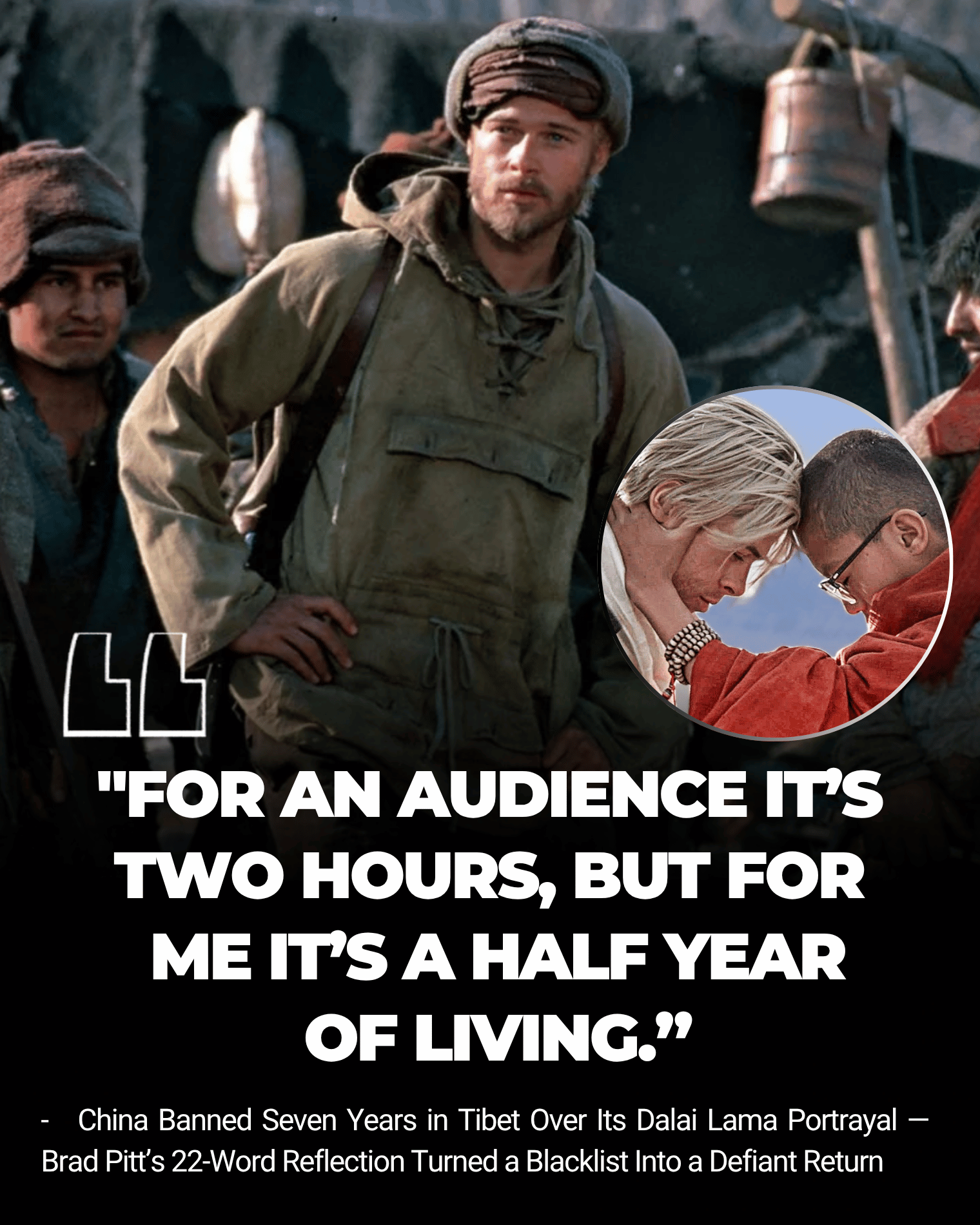
“I’d say yes. Sure. All movies are. For an audience it’s two hours, but for me it’s a half year of living,” Pitt said, stripping away the glamour around filmmaking.
That 22-word reflection gave Seven Years in Tibet a different emotional weight, because Pitt was not speaking like a celebrity chasing controversy or applause from the sidelines.
He was describing the strange, consuming reality behind a performance: audiences see a finished film in one sitting, while actors spend months carrying another person’s history.
And in this case, Harrer’s story came wrapped in a political conflict too powerful to remain safely inside a cinema screen, no matter how polished the production looked.
The supposed ban seemed like it could become a permanent dividing line between Pitt and China, especially after the intense international reaction surrounding the film’s Tibet narrative.
But the years that followed made that ending look far less final than it first appeared, with Pitt later surfacing in China in 2014 and again in 2016.
Those appearances did not erase the controversy surrounding Seven Years in Tibet, nor did they settle every question about the status of the reported restrictions against its stars.
Still, they added an undeniable twist to a saga once framed as a total shutout, showing that global celebrity, politics, and public memory rarely follow a clean script.
For Pitt, the movie remains a reminder that an actor can walk onto a set expecting an epic character study and leave carrying the consequences of a geopolitical firestorm.
What began as seven years in one man’s extraordinary life became, for Brad Pitt, a half-year of living through a role whose real-world echoes refused to fade quietly.