
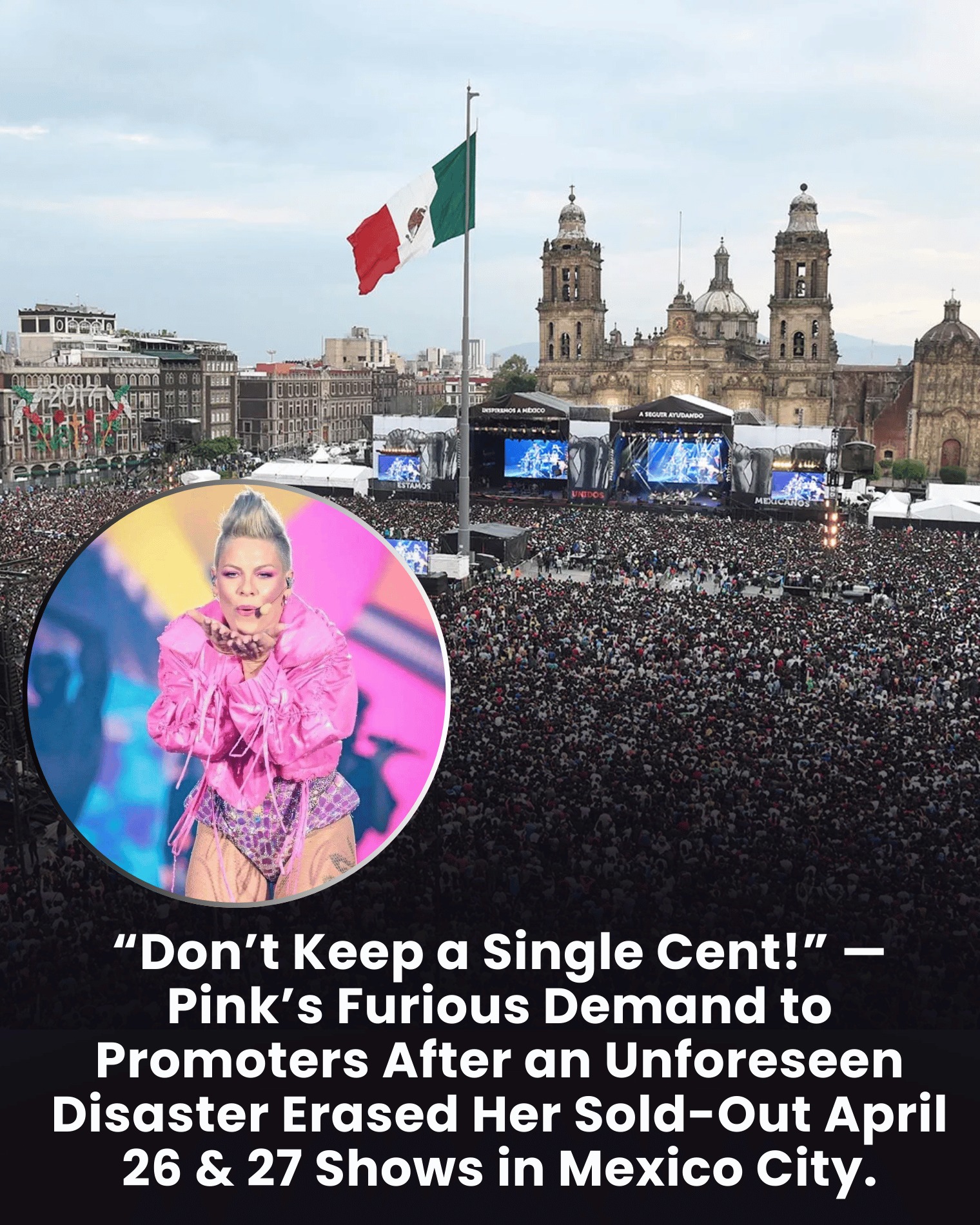
In April 2026, fans in Mexico City were eagerly preparing for two massive concerts by P!nk, scheduled for April 26 and 27 at Estadio GNP Seguros. The shows were completely sold out, and anticipation was especially high because P!nk's performances are famous for their breathtaking acrobatics, explosive stage design, and emotionally charged live vocals. For thousands of fans who had waited months for the event, it promised to be one of the most exciting nights of the year.
However, just before the concerts were set to take place, an unexpected logistical disaster forced the production team to cancel both shows. According to reports from people involved in the tour, the problem centered on the transportation and installation of the highly specialized rigging equipment required for P!nk's aerial performance sequences. These massive mechanical systems are not ordinary stage props—they are complex engineering structures designed to safely support the singer as she flies above the audience during some of her biggest songs.
Without that equipment properly installed and tested, the show simply could not meet the safety standards required for her performance. P!nk's concerts depend heavily on these aerial elements, and performing without them would have meant delivering a drastically reduced version of the show fans had paid to see.
Rather than attempting a scaled-down concert, P!nk made a firm decision. The shows would not go forward.
What happened next quickly became one of the most widely discussed moments of her tour. According to sources close to the situation, P!nk immediately demanded that promoters and ticket vendors provide full refunds to every fan who had purchased tickets. Her request reportedly went further than standard refund policies—she insisted that even additional service charges and processing fees be returned.
For many ticket holders, those fees can represent a significant extra cost beyond the base ticket price. Ensuring that fans received every cent back required direct negotiations with ticketing partners and event promoters. Insiders say P!nk was adamant that fans should not lose money over a situation they had no control over.
In a brief message to the public, the singer expressed gratitude to fans for their patience and understanding. While disappointed that the shows could not happen as planned, she emphasized that safety and fairness had to come first.
The decision resonated strongly with her audience. In an era when concert cancellations sometimes leave fans struggling to recover their money, P!nk's insistence on full reimbursement was widely seen as an example of accountability and respect for the people who support her career.
It also reflected the philosophy she has maintained throughout her decades-long career. Known for her outspoken personality and strong connection with fans, P!nk has repeatedly emphasized that her audience is not simply a consumer base—they are part of a community she often calls her "family."
Financially, the cancellation meant losing a significant amount of revenue from two sold-out stadium shows. Yet for an artist whose career spans more than two decades and whose tours regularly rank among the highest-grossing in the world, the financial loss was not the primary concern.
What mattered most to her was maintaining trust with the fans who had traveled, planned, and spent money to attend the concerts. By pushing for full refunds, she made it clear that the responsibility for the failed logistics belonged to the production side—not the audience.
For many observers, the incident revealed something important about the human side of global superstardom. Behind the elaborate stage shows, record sales, and international fame, P!nk demonstrated a simple principle: when something goes wrong, the fans should never be the ones left paying for it.